Hudson Valley Naturalist: This Solo Act Is a Seasonal Trifecta: Bloom, Blush, and Bark
If you have ever been caught in traffic on Route 9 near the Mid-Hudson Bridge, or hunted for parking in Rhinebeck on a chaotic Saturday, you know Hudson Valley life isn't always bucolic. Our Dutchess County has a quiet charm, but its busiest hubs can get overwhelmed. Tranquility lies a short drive away along less-traveled macadam – near orchards, split-rail fences, and pristine landscapes. "Going solo" is appealing. That is a lesson perfectly illustrated by the uniquely individual Heptacodium miconioides, the seven-son flower.
Adopting a Sole Survivor
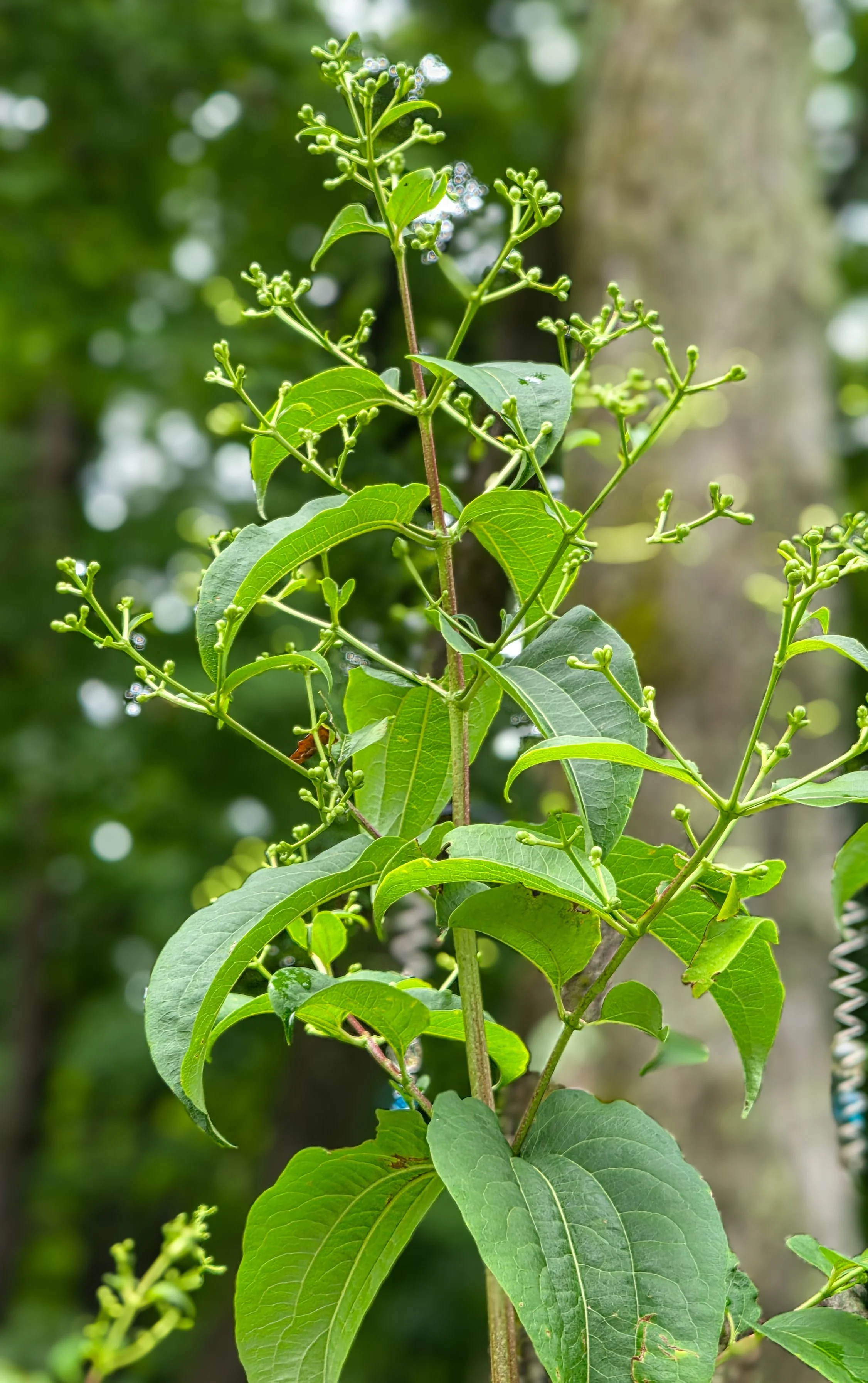
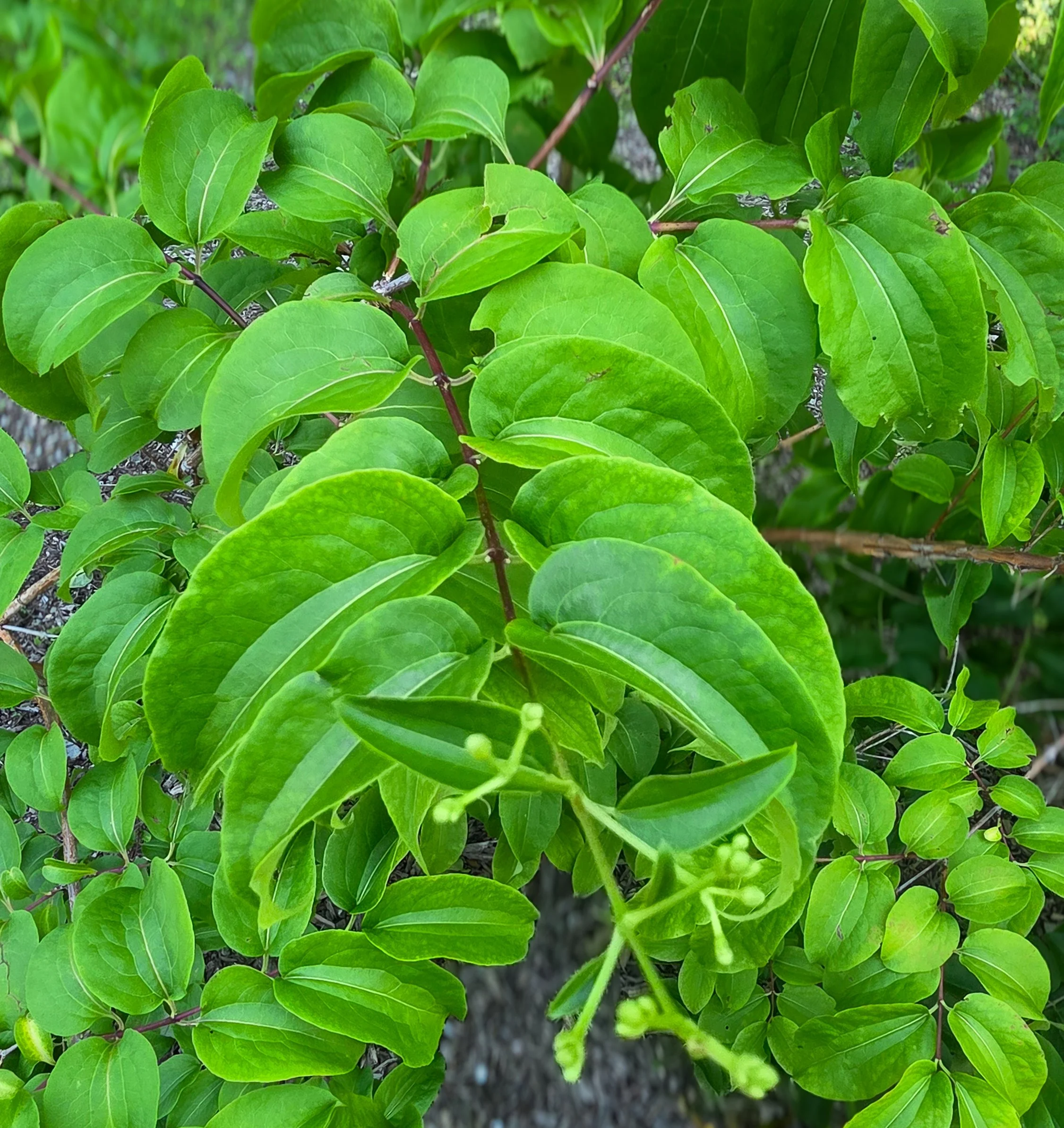
The first plant purchase I made for my Pleasant Valley home was found four years ago on a discount rack. A bargain! When I bought it, I didn't realize I was adopting a botanical celebrity. The seven-son flower is monotypic, meaning there is only one species within the genus. While about 10-percent of plant genera share this lonely designation, the seven-son flower wears its isolation with confidence. It doesn't need a flock of close relations. I got two and planted them next to each other — because even a solo act appreciates harmony.
Heptacodium History
While the official botanical record claims the seven-son flower was "discovered" by Westerners in 1907, local people in China had known about this cliff-dweller for centuries. The early ecologists who took note of Heptacodium weren't looking to stock nurseries. Their goal was to take a small clipping, press it flat, and store it in a museum drawer.
For nearly a century, Heptacodium existed in the West only as a dead herbarium specimen. Following the Chinese Communist Revolution, closed borders paused cross-continental scientific exchange. This division lasted until the 1980 Sino-American Botanical Expedition – a historic, three-month trek that marked the first collaboration between Western and Chinese scientists since 1949. Looking at the shrub with modern eyes, they realized this museum curiosity could become a versatile landscape plant.
Coming to America
The seeds were brought to the Arnold Arboretum in Massachusetts, which subsequently distributed seedlings throughout North America. Nearly all garden specimens today share that original lineage, including my two adoptees. However, conservationists continue to brave treacherous cliff terrain, gathering rare seeds from the few remaining wild populations to introduce vital genetic diversity.
What’s So Special?
“Meh,” you might be thinking, “What makes this shrub so special?” After all, I’ve written about the trumpet-shaped blooms of Weigela, the reproductive details of winterberries, and regaled you with a variety of other scientific fascinations. What makes this shrub noteworthy are its unconventional displays.
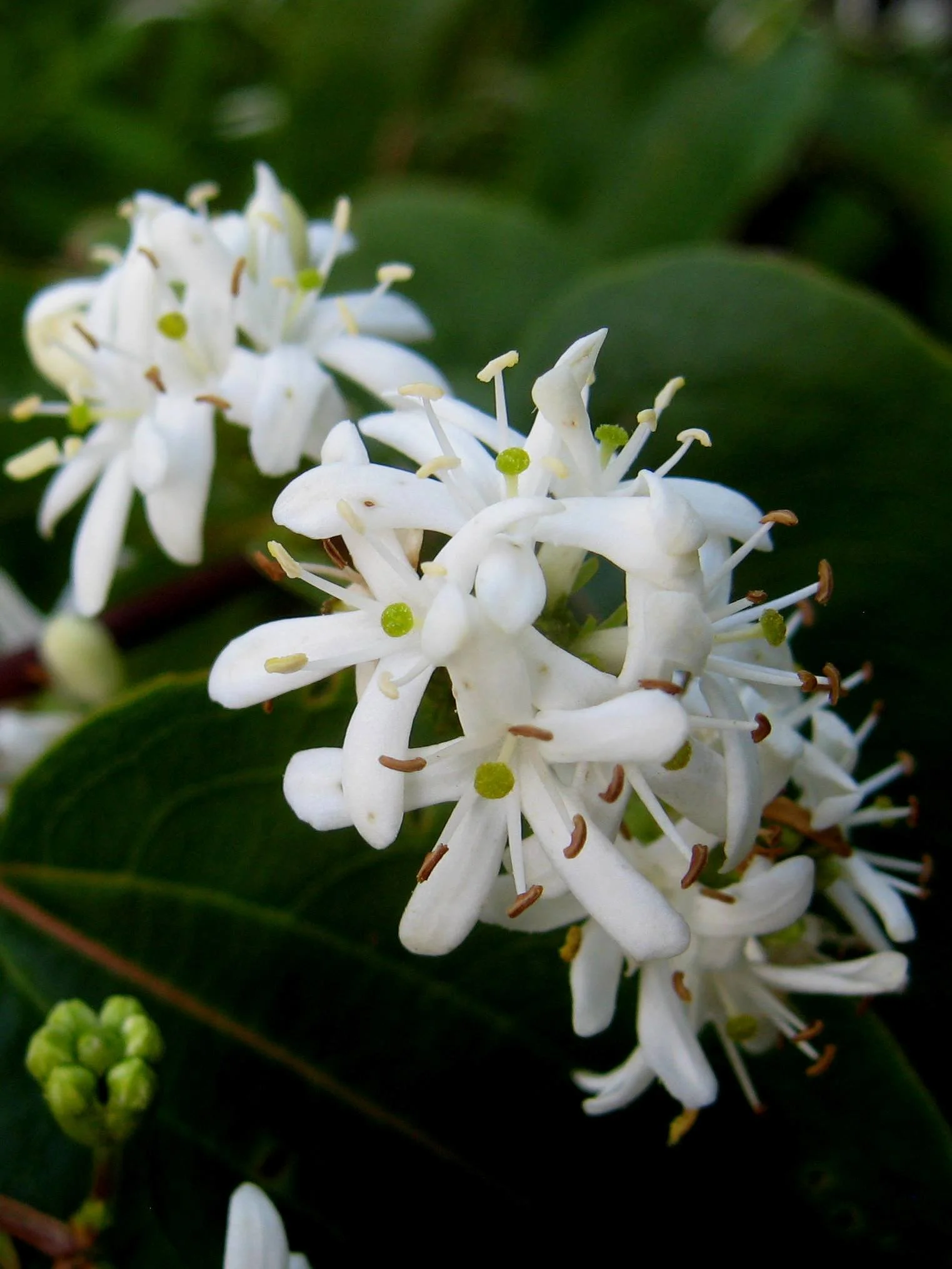
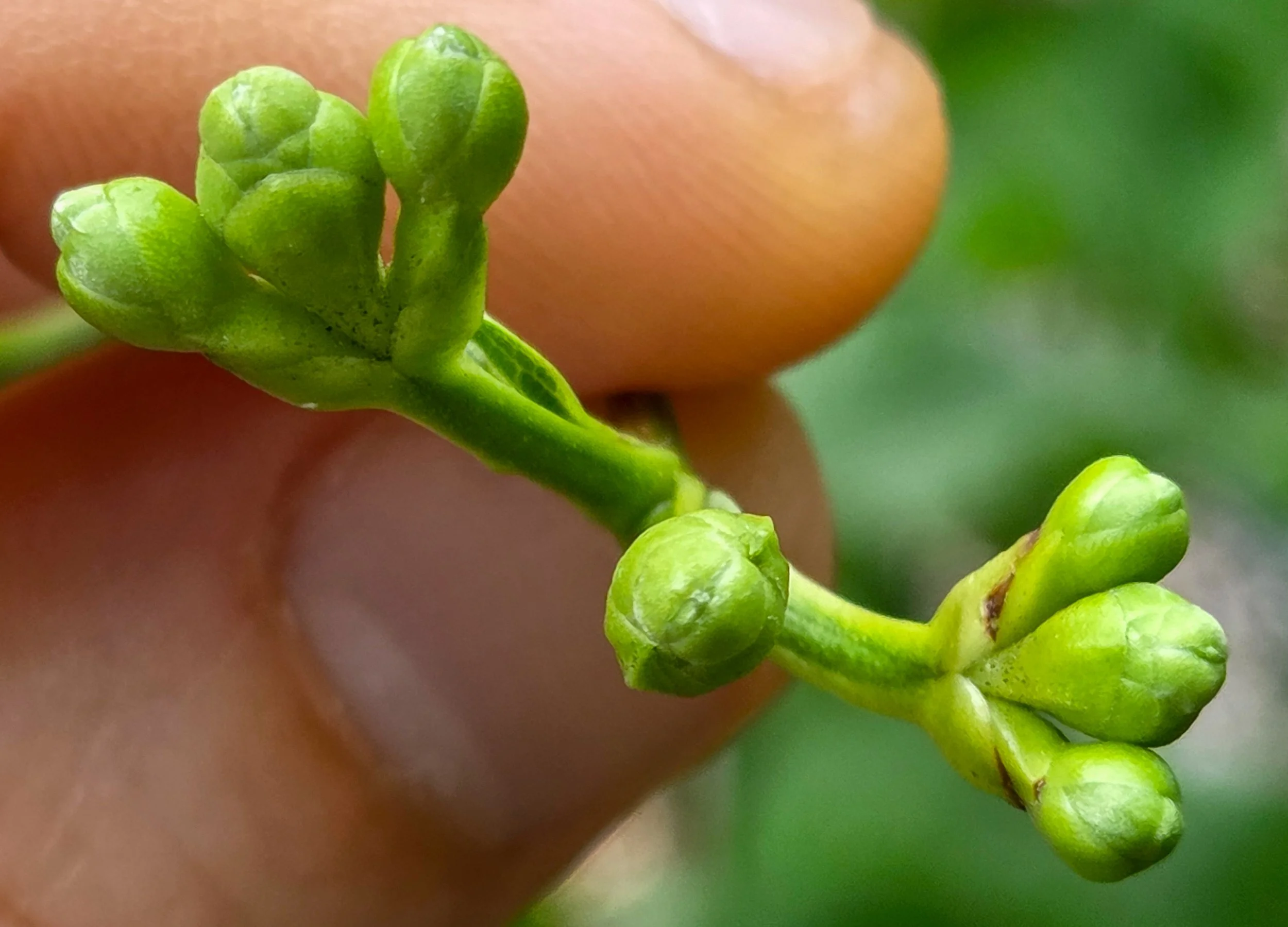
In late August, most greenery is sun-bleached and readying for a winter nap. But Heptacodium is ready to party. It erupts with fragrant, white flowers. The blossoms appear in clusters containing two opposite rows of three, encircling a central bud. This central bud mimics an additional bloom to create the visual illusion of a "seventh son," hence its common name. Butterflies and bees flock to the blooms like commuters rushing to Metro-North.
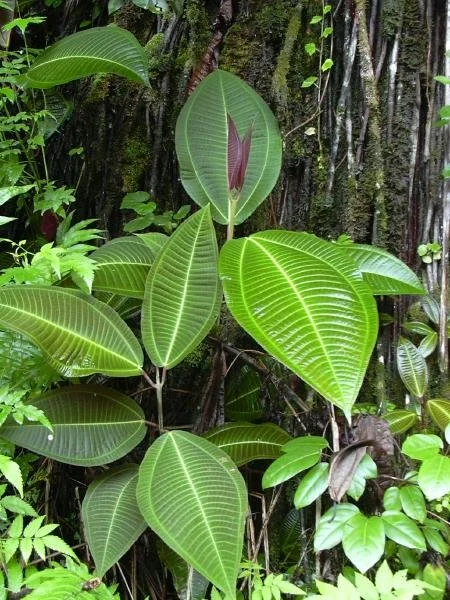
The prefix hepta- is Greek for seven, combined with kodia, meaning 'head' – a nod to its seven-parted appearance. The specific epithet, miconioides, alludes to the plant’s boldly veined leaves, which closely resemble plants in the tropical Miconia genus. I remember learning about Miconia from the National Geographic series, Strange Days on Planet Earth. The episode “Invaders” explained that Miconia became a highly destructive invader on tropical islands like Hawaii because it lacks limiting factors, such as competition or predators, to prevent its overgrowth.
Fortunately, the three prominent veins running from the base to the tip of Heptacodium’s leaves are simply a case of convergent evolution – a biological phenomenon where unrelated species independently develop analogous traits to adapt to similar environments. Despite the physical resemblance, Heptacodium is entirely unrelated to the tropical invader and behaves as a perfectly polite guest.
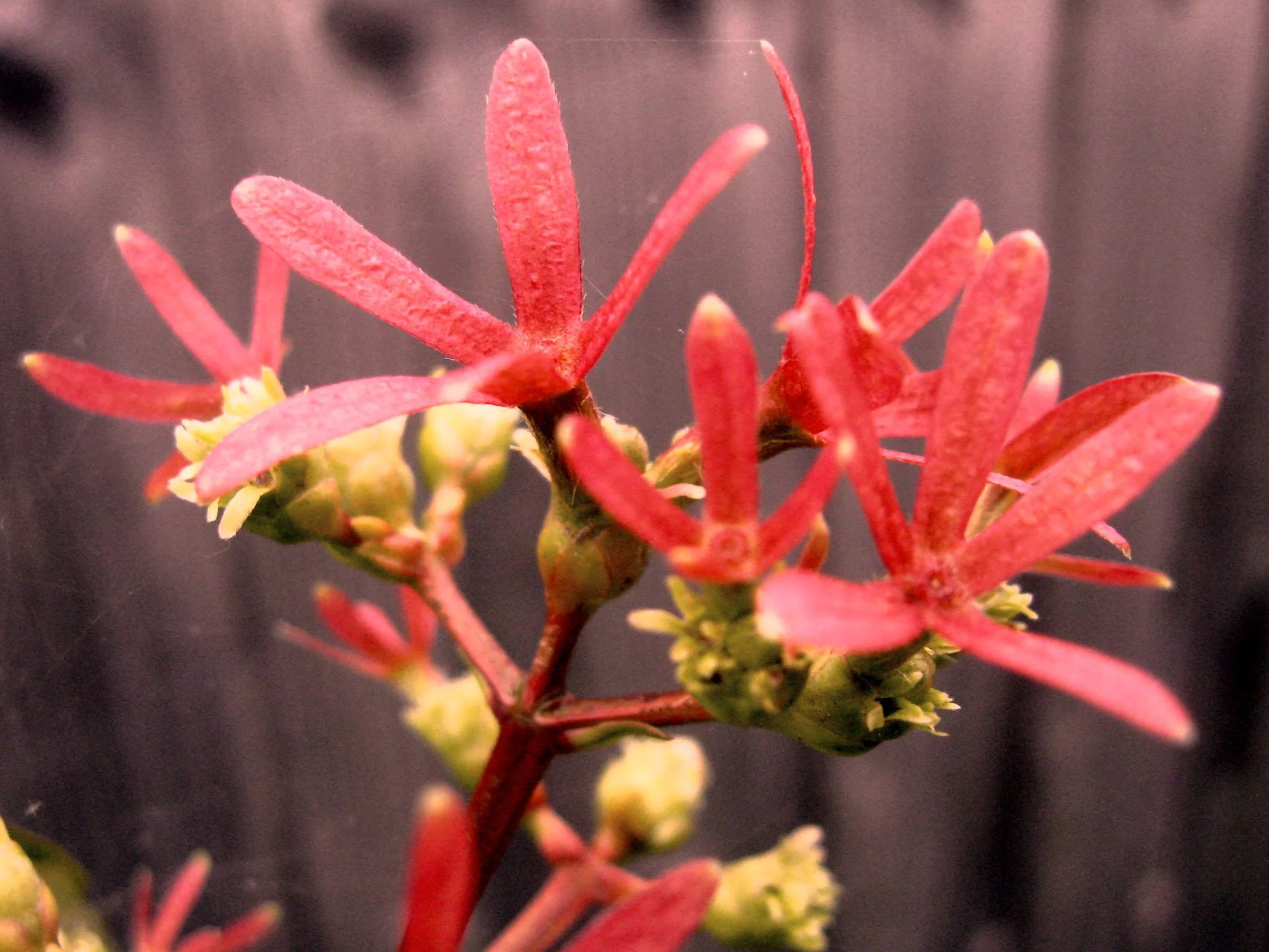
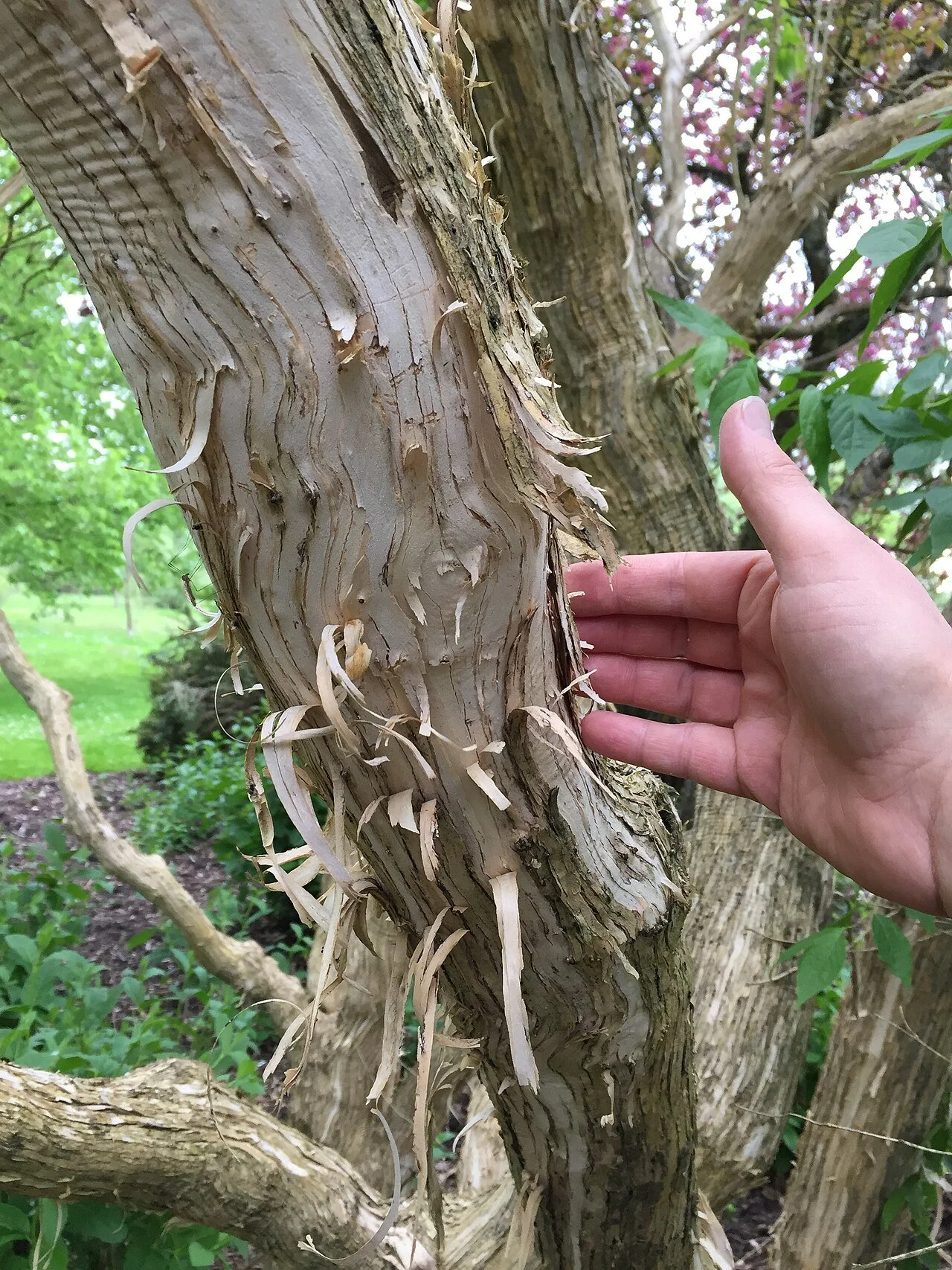
After its flowers fade, the underlying sepals expand and “blush” in varying shades of red as autumn progresses. This is a dramatic show that lasts through October. When November arrives and the leaves drop, Heptacodium reveals its winter wardrobe. Its bark exfoliates in shaggy, tan strips, providing visual interest against a backdrop of snow.
Heptacodium is a conversation starter that survived a century of obscurity. It supports Hudson Valley pollinators during the late-summer nectar drought, making it well worth the garden real estate. Its fall and winter show is proof that you don't need a crowd of close relations to make a major impact. Sometimes being a solo act is the best way to stand out in the crowd.
Francine Wizner is a native of the Hudson Valley. She grew up in the Catskills of Greene County and spent over three decades teaching in Ulster County. She creates science-themed instructional materials and books, as well as being a Citizen Scientist in the management of her current home in an enchanted woodland of Dutchess County. Find her at https://medium.com/@wiznerf, https://substack.com/@gkatzchronicle, and https://www.youtube.com/@PVMapleLodge.
https://www.teacherspayteachers.com/store/gkatzchronicle
https://www.youtube.com/@gkatzchronicle
https://www.amazon.com/stores/G.-Katz-Chronicle/author/B07H1KXWD2/allbooks