Neither Butcher, Candlestick Maker, Nor Baker Am I: Confessions of an Aspiring Sourdough Scientist
by Francine Wizner
Hudson Valley Naturalist
I have long found bread to be multiply fascinating, delicious, and addictive. It is undeniably yummy and crave-worthy. There is also a brilliant alchemy in how our bodies dismantle carbohydrates into sugar to fuel our daily adventures, thriftily tucking away unused glucose into glycogen and fat reserves. Hence, my deep love-hate relationship with the victual.
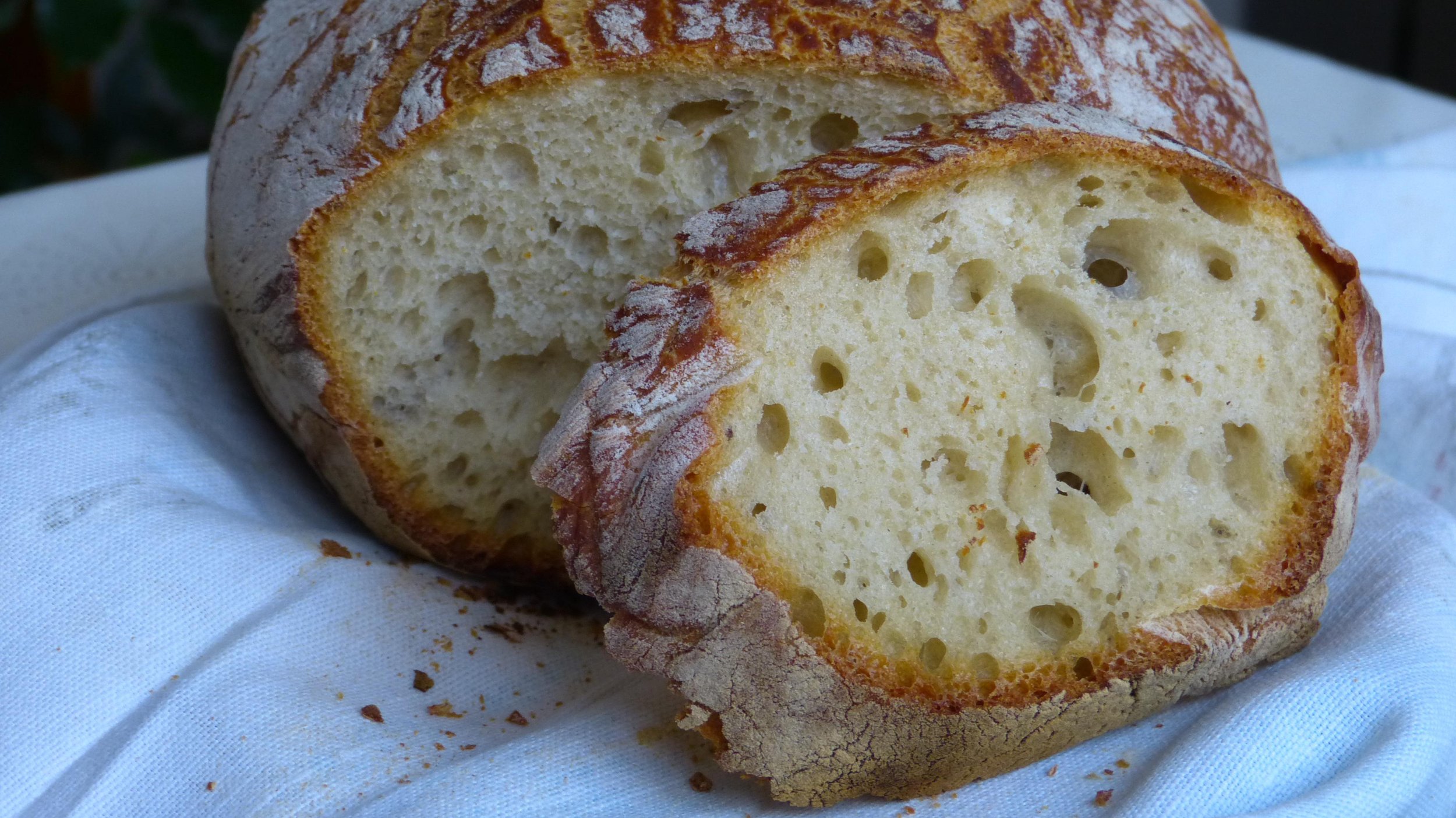
This fall, as the weather cools, I will don my toque for some kitchen alchemy. I investigate with intention: satisfying and healthy fare. My scientific objective? A crusty, yet soft and chewy sourdough bread. Neither butcher, candlestick maker, nor baker am I. As a minimalist, I do not possess professional chef-gear. I am a mere columnist with some recipes, an interest in science, and a desire to find out if “homemade” is worth the effort.
Dutchess Bread Box
Historically speaking, this region knows a thing or two about grain. The Old Mill House on Beekman Poughquag Road stands as a testament to those days of yore. In the late 1700s, it was the beating heart of local agriculture, milling flour that fed George Washington’s Continental Army. By the early 19th century, Dutchess County was the state's largest flour producer.
With that legacy, it can’t be that hard to bake a simple country boule. I shall channel my inner pioneer and create a traditional free-form loaf.
Laboratory Learning Curve to Manage Microbes
Sourdough relies on biological leaveners living all around us – on surfaces, in the air, and within the flour itself. Flour contains 70-75% starch. When hydrated with water, natural enzymes activate and digest the starch into sugars. Then wild yeast consumes the sugars, releasing carbon dioxide and alcohol—hence the name alcoholic fermentation.
Simultaneously, healthy bacteria break down the sugars through lactic acid fermentation. The low pH environment produced by the bacteria kills off harmful molds and microbes, leaving the acid-tolerant wild yeast safe to thrive. As yeast cells naturally live and die, they provide nutrients for the bacteria.
Homemade sourdough begins with cultivating a "Starter" – a microbial consortium where wild yeast and lactic acid bacteria live together in a stable, symbiotic paste of flour and water. In this community, the ratio of bacterial cells to yeast cells is about 100 to 1. The wild yeast provide the carbon dioxide gas needed for loft, while the bacteria ferment sugars into tangy acids that provide flavor and protect the colony from spoilage.
The yeast and bacteria, my “cultural collaborators”, have been collectively named "Bready Krueger". As their host, I must feed Bready Krueger flour daily to replenish carbohydrates for the hungry microbes. It takes about 7 to 10 days to build a healthy starter.
Observations are key. The colony gives off aromas – stinky-feet, malty, even of alcohol. A boozy bouquet accompanied by a brown liquid “hooch” is a sign it is starving. Stir that stuff in for tangier bread. If I keep Bready Krueger well fed and at a comfortable room temperature, I’ll wind up with a milder loaf.
Bare Bones Baker Forsakes Convenience
Most people who bake “from scratch” are familiar with the beige granules of commercial yeast. It lies dormant until it hits warm water, then quickly ferments, feeding on sugars and releasing carbon dioxide to make bread in as little as an hour. It is convenient, though the flavor may lack complexity.
To bake a loaf of naturally fermented sourdough, you combine a portion of starter with flour, water, and salt. Building protein chains so carbon dioxide gets trapped inside requires active, periodic intervention: pulling the dough and folding it back over itself every thirty minutes for two hours. After shaping it into a loaf and granting it an overnight rest in the fridge, it's finally ready to bake!
Authentic pioneers had “bake kettles;” connoisseurs and professionals own Dutch ovens. But who needs extra kitchen paraphernalia when a roasting pan filled with boiling water on the bottom oven shelf serves well enough? Steam keeps the exterior soft so the gases inside expand rapidly, before removing the water to finish with a “dry-bake” to caramelize the crust.
With so many steps, there are plenty of opportunities for failure. My result might be a dense orb that Washington's army could shoot from a cannon. But science is trial and error. As long as there is butter to slather on my “practice loaves,” there will be no waste!
I’m not a candlestick maker, butcher, nor baker – just a “sciencey gal” with a grand plan for feeding wild microbes and living up to our region’s milling history, one loaf at a time.
(If you would like to learn about flour, gluten, or the variables involved with baking bread, check out these educational activities: https://www.teacherspayteachers.com/Product/FLOUR-GLUTEN-BREAD-ACTIVITIES-BUNDLE-11341362.)
Francine Wizner is a native of the Hudson Valley. She grew up in the Catskills of Greene County and spent over three decades teaching in Ulster County. She creates science-themed instructional materials and books, as well as being a Citizen Scientist in the management of her current home in an enchanted woodland of Dutchess County. Find her at https://medium.com/@wiznerf, https://substack.com/@gkatzchronicle, and https://www.youtube.com/@PVMapleLodge.
https://www.teacherspayteachers.com/store/gkatzchronicle
https://www.youtube.com/@gkatzchronicle
https://www.amazon.com/stores/G.-Katz-Chronicle/author/B07H1KXWD2/allbooks