This pseudo-cereal is a complete protein
by Francine Wizner
Hudson Valley Naturalist
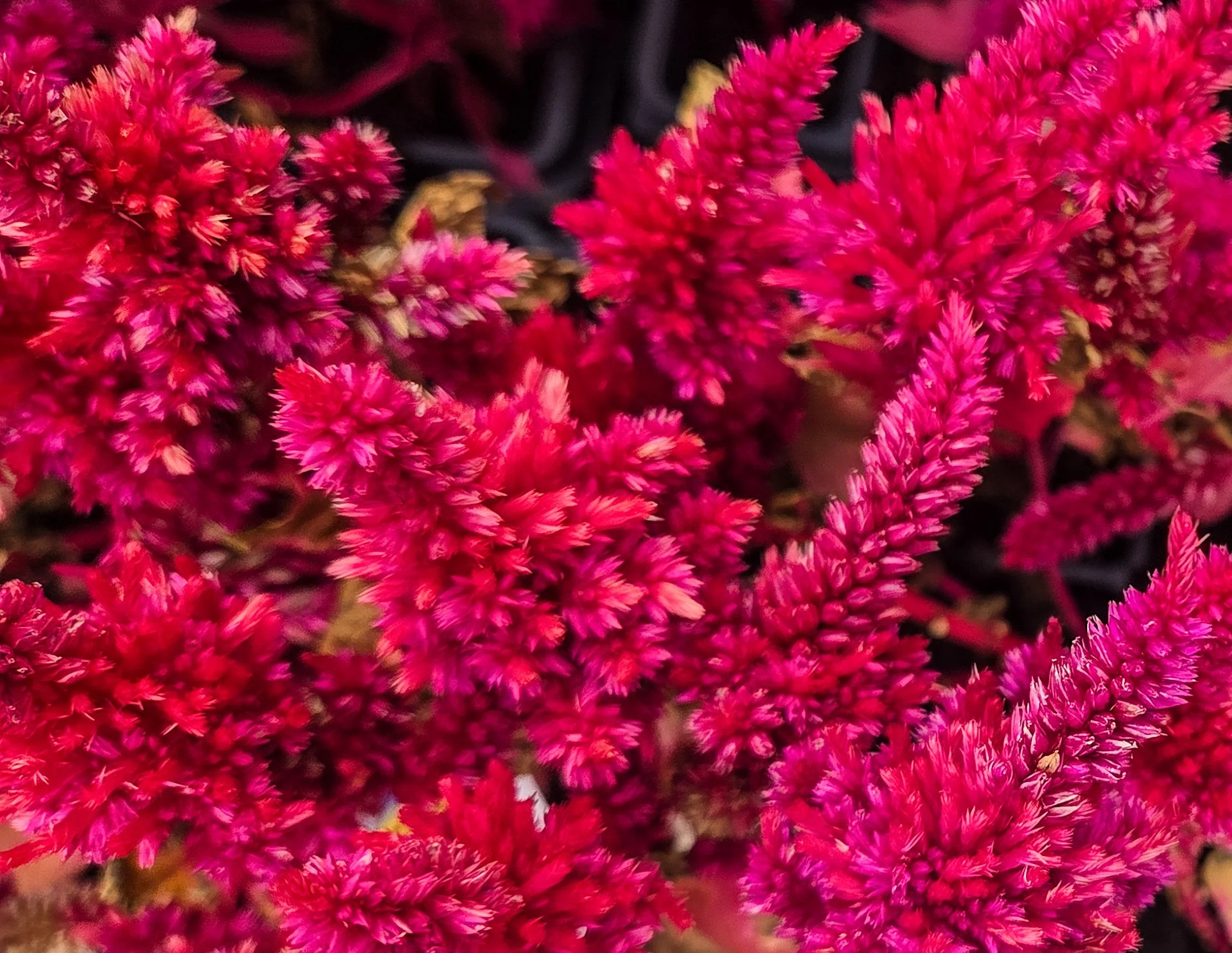
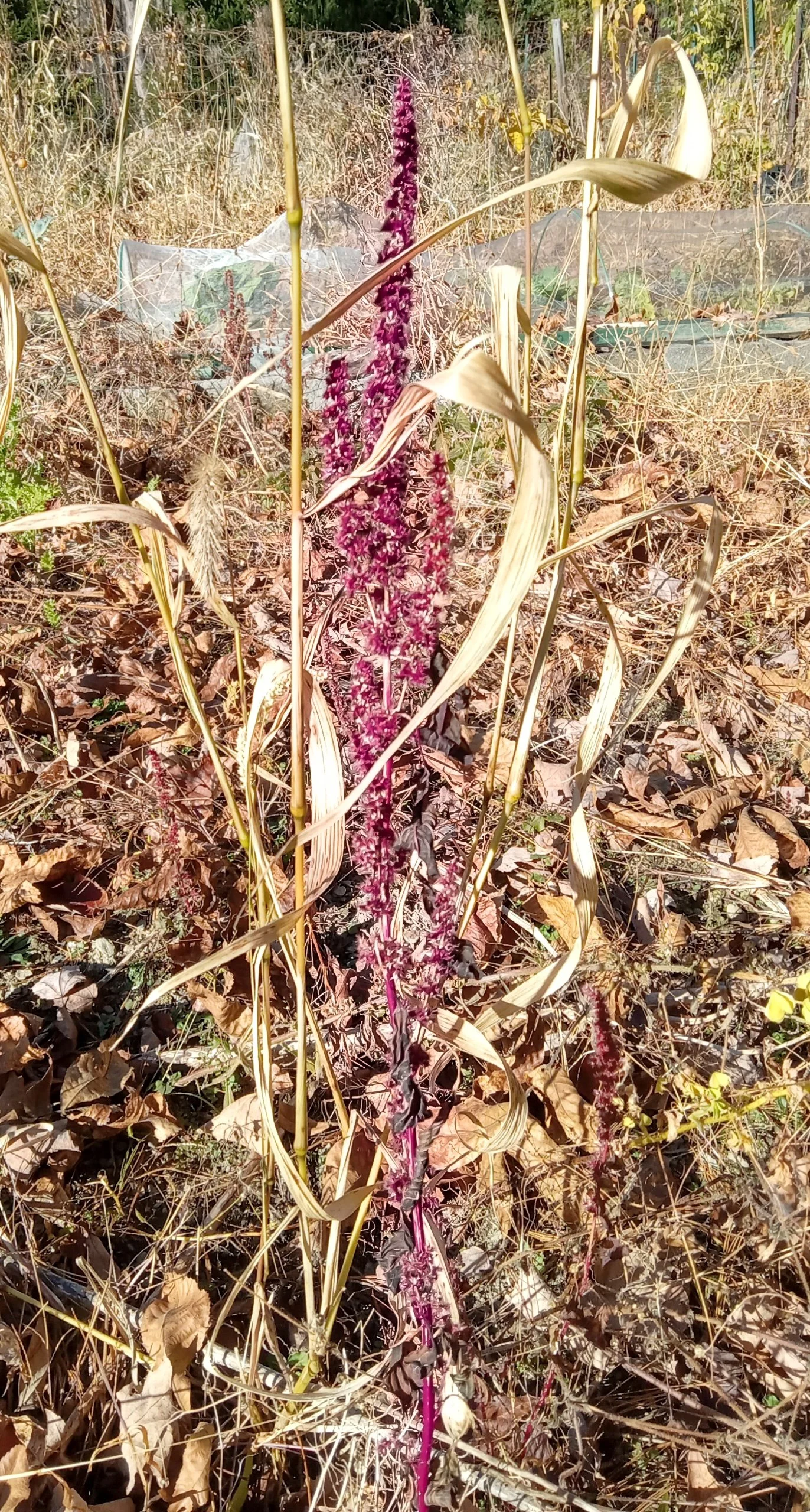
If an unusual flash of color in a stark November garden draws your eye, the attention grabber might be a common summer annual. Its skeletal, upright spires hold fast against the northern wind in frost-bitten mulch beds. Even in death it holds a shade of its former crimson glory — its Greek name amarantos means “unfading” — a nod to its resilient nature. But amaranth’s claim to fame isn’t its pigment; it is noteworthy for its fecundity.
Hyper-Efficient Reproductive Machine
Tucked inside the plant’s soft, feathery spikes is a prolific seed factory. Amaranth doesn’t wait for bees; the plants self-pollinate or let their seeds fly on a breeze. When the spike dries in autumn, the grains drop to the earth or hitch a ride with birds and rain. Some wild species snap at the base and become tumbleweeds, shaking loose their progeny with every bounce. In the soil, the seeds can lie dormant for decades until a passing foot or shovel stirs them into the sunlight.
Even though amaranth is an annual, its flower heads can crank out up to 500,000 microscopic grains. The seeds comfortably sleep through sub-zero Hudson Valley winters, unfazed by ice and snow. Come May, the multitudes wake up and sprout. Amaranth mimics a perennial through aggressive overproduction; once invited into your garden, it becomes a permanent tenant.
A Crop That Sustained Empires
As a dietary staple for millions, amaranth stretches across human history. In the Andes, the Incas integrated it into terrace systems alongside quinoa to secure crops that could thrive in poor soil with little water. Similarly, the Maya of Central America cultivated amaranth for millennia, consuming both its protein-dense seeds and vitamin-rich leaves.
Other communities developed specialized uses: The Hopi grew a deep-red species as a food and textile dye, while Mississippi River basin groups relied on amaranth as a seasonal nutritional failsafe. The ultimate integration of amaranth was in the Valley of Mexico with the Aztecs, who elevated it from a vital crop to a sacred symbol, even using the seeds as currency. During festivals, popped amaranth seeds were mixed with honey to sculpt statues of their deities, which the community consumed at the ceremony’s conclusion as an act of religious devotion.
Cortés Was Anti-Amaranth
When Spanish forces arrived in the Valley of Mexico in 1519, Hernán Cortés realized the plant’s nutritional value fueled Aztec resistance, while its spiritual significance threatened Spanish control. Consequently, Cortés banned the plant, burning fields and punishing growers.
Aztec civilization survived by integrating ancient traditions into an emerging Mexican culture, proving that the Spaniards could not defeat botany. Amaranth seeds simply waited out the occupation in mountain cracks and ditches. It soon hitched a ride on global trade routes, exploding across Africa as a leafy green and traveling to the Himalayas, where it is consumed in India and Nepal as both a vegetable and a grain.
It’s a Faker: It’s a Pseudo-cereal
True cereal grains once powered historic gristmills along local creeks, where Dutchess County farmers processed wheat, rye, and barley for regional families and downriver export. Those true grains rely upon gluten to give traditional dough its elastic, chewy texture. But pseudo-cereals — such as buckwheat, quinoa, and amaranth — are broadleaf plants, not grasses, and are inherently gluten-free.
Amaranth is a botanical “faker” because its tiny seeds mimic grains in the kitchen, yet it lacks the genetic code to produce gluten. This is an asset for a gluten-free diet, but for bread-baking, amaranth requires binders for lifted structure.
Though pseudo-cereals lack gluten, they provide a rare, plant-based source of complete protein. There are nine essential amino acids the body cannot produce on its own, and pseudo-cereals provide them in the ratios it needs, whereas grains do not. Gram for gram, these ancient seeds also provide dietary fibers and vital minerals like magnesium, iron, and zinc, delivering sustained energy with a low glycemic impact.
Turkey Table Buddy
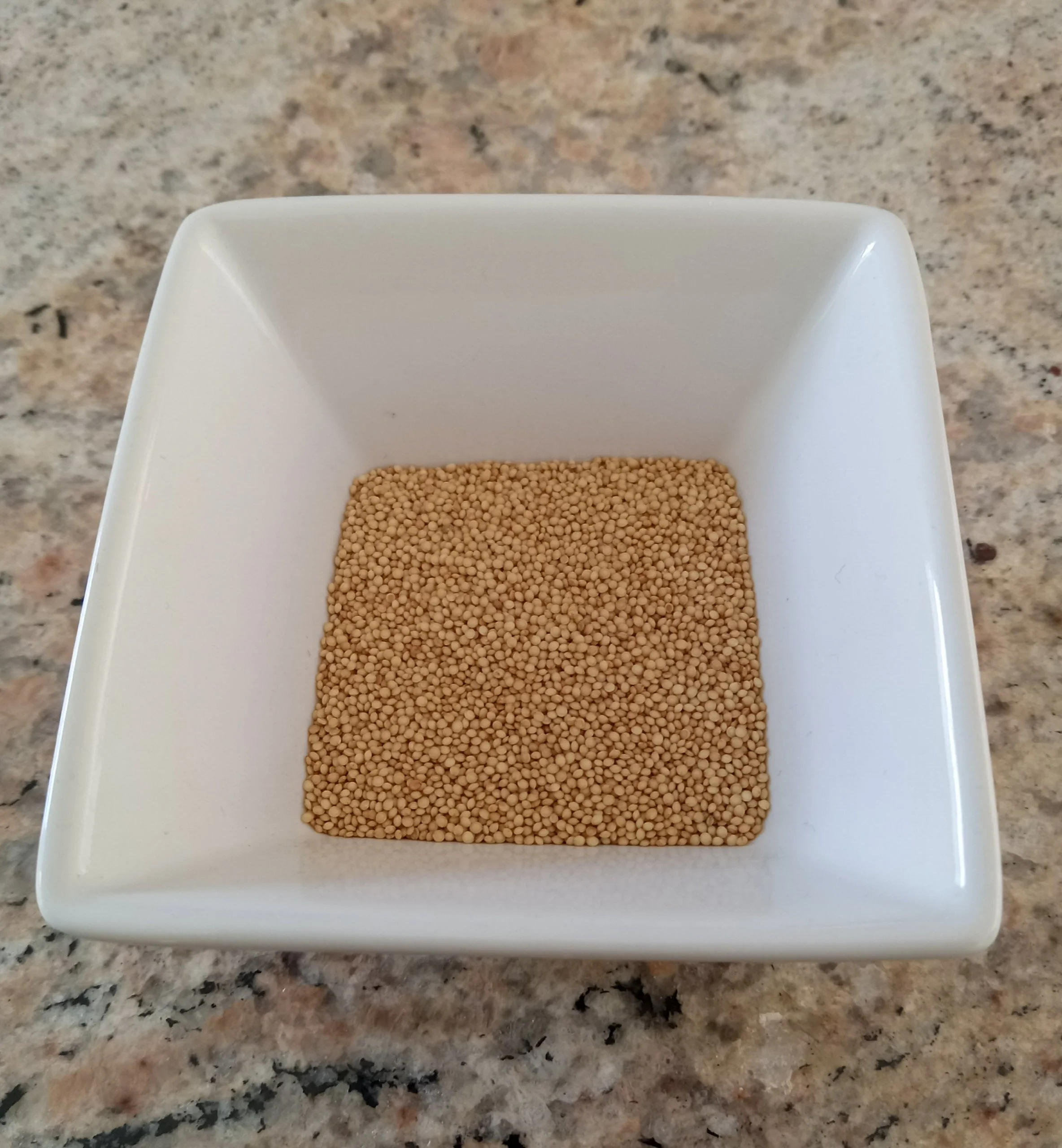
Given those health benefits, you should add this global survivalist to your Thanksgiving table. The tiny pocket of moisture sealed inside its hard outer hull means it will pop like corn, making it a great snack. Those nutty puffs can be mixed into stuffing, soups, and stews for added texture. Cooked amaranth can be served as a side dish or in a fall salad, and amaranth flour can be combined with other flours in baked goods.
Glen White of Clinton uses it in soups and stews for a change of pace from pasta. “I also make it into a porridge with fruit and yogurt,” White says. “It has an earthy flavor profile. Adding sweetener and cinnamon makes it a comforting dish.”
Francine Wizner is a native of the Hudson Valley. She grew up in the Catskills of Greene County and spent over three decades teaching in Ulster County. She creates science-themed instructional materials and books, as well as being a Citizen Scientist in the management of her current home in an enchanted woodland of Dutchess County. Find her at https://medium.com/@wiznerf, https://substack.com/@gkatzchronicle, and https://www.youtube.com/@PVMapleLodge.
https://www.teacherspayteachers.com/store/gkatzchronicle
https://www.youtube.com/@gkatzchronicle
https://www.amazon.com/stores/G.-Katz-Chronicle/author/B07H1KXWD2/allbooks